

Here it is! Traditional Ceremonies in Bali Rich in Meaning
Wigobali.com – Bali offers more than just beaches, temples, and natural scenery that make tourists want to stay longer.
Behind the hustle and bustle of tourist areas such as Kuta, Seminyak, and Ubud.
The Island of the Gods preserves a traditional way of life that is still practiced and remains an important part of the daily lives of its people.
One of the most interesting aspects is Bali’s various traditional ceremonies. For tourists, these traditions may look like cultural performances.
However, for Balinese Hindus, every series of ceremonies has its own meaning, rules, timing, and stages of spiritual values passed down from generation to generation.
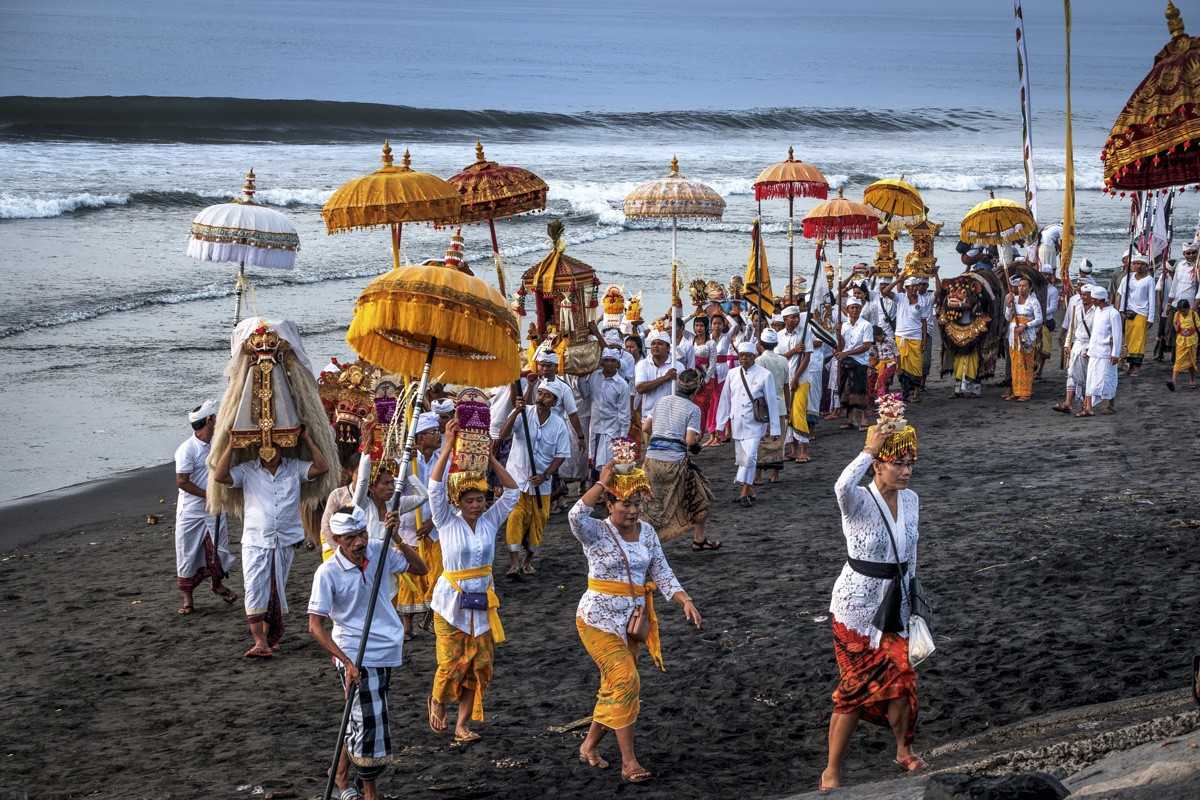
Quite a few tourists who happen to arrive while a ceremony is taking place then choose to pause for a moment.
Then they watch the procession from a distance, or take in the atmosphere among the community while continuing to respect local rules.
Here are several Balinese traditional ceremonies worth knowing about.
1. Melasti Ceremony
This distinctive Balinese tradition is often held as part of a purification ritual ahead of Nyepi
Several days before Nyepi, the atmosphere in Bali begins to change.
Hindu communities bring various ceremonial items to sources of water considered sacred, ranging from the sea and lakes to springs.
This tradition is known as Melasti.
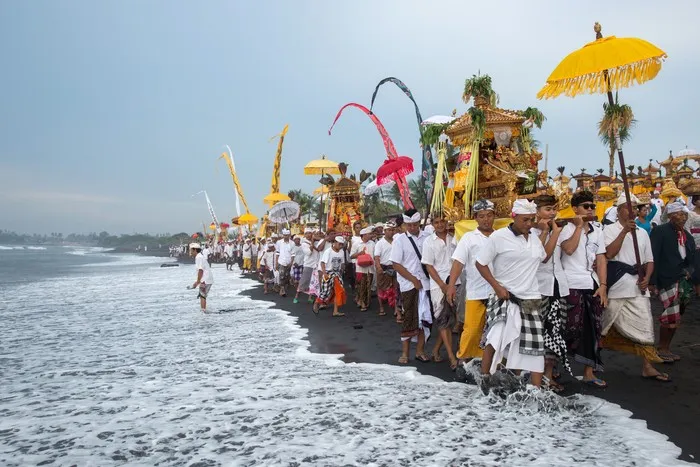
Melasti is part of the series of ceremonies welcoming Nyepi and is associated with the purification of oneself and nature.
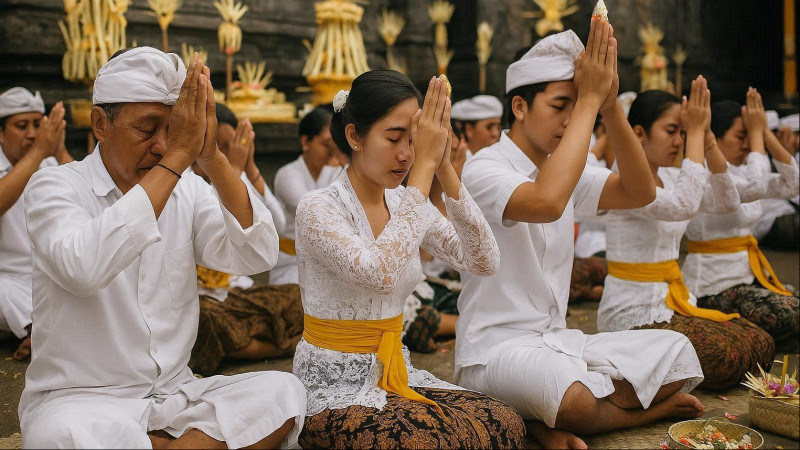
During the procession, people pray for purification while also taking tirta or holy water, which carries spiritual significance.
The priest then sprinkles holy water on the worshippers as part of the purification ritual.
The atmosphere is distinctive: people wear traditional Balinese clothing, carry prayer offerings, while the procession moves toward the water source.
For tourists, Melasti is one of the interesting moments to see a different side of Bali.
Not Bali with the bustle of beach clubs or entertainment districts, but Bali carrying out its traditions with solemn devotion.

However, if you want to witness it firsthand, tourists need to pay attention to etiquette.
Do not disrupt the procession, enter sacred areas carelessly, or take pictures while worshippers are praying without permission.
2. Ngaben
Besides the Melasti Ceremony, Bali also has a tradition for accompanying those who have passed away.
This tradition is often called the Ngaben ceremony.
If there is one Balinese tradition that often makes tourists curious, Ngaben is one of them.
Ngaben is a cremation ceremony in the Balinese Hindu tradition.

This procession is not merely a funeral, but part of a ritual to accompany the deceased toward the next life.
Its implementation can be quite complex.
The deceased is carried in a ceremonial procession that usually involves family, relatives, and the community.
One of the most recognizable parts is the procession toward the cremation site.
Because it requires considerable preparation and expense, Ngaben is not always held at any given time.
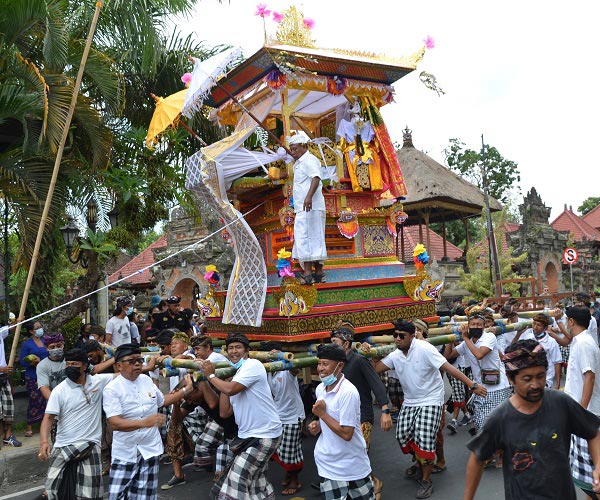
In some circumstances, families may also choose to hold a joint ceremony or adjust the timing according to various customary considerations.
In general, several forms of Ngaben are known, including Sawa Wedana, Asti Wedana, and Swasta.
Sawa Wedana is performed when the body is still present and then undergoes cremation.
Asti Wedana concerns a body that has previously been buried, while Swasta is performed when the body cannot be found or when someone dies outside the region.
What is interesting about Ngaben is the way Balinese people view death.

Amid an atmosphere of grief, families instead strive to send off their loved ones sincerely.
For this reason, Ngaben is not always synonymous with sadness, but also serves as a form of respect and letting go.
3. Galungan
When Bali celebrates the victory of Dharma there is a ceremony often referred to as Galungan.
If you visit Bali when Galungan arrives, do not be surprised if the streets are filled with penjor standing to decorate house yards and roadsides.
Galungan is one of the important holidays for Balinese Hindus.
The name Galungan comes from Old Javanese and means victory.

In its tradition, Galungan is associated with the victory of dharma or goodness over adharma.
This celebration takes place according to the Balinese calendar and occurs every 210 days.
Throughout the Galungan series of ceremonies, people carry out various religious activities and prayers.
Homes are decorated, families gather, and temples become busier than usual.
The tall, curved penjor in front of houses are not merely decorations.
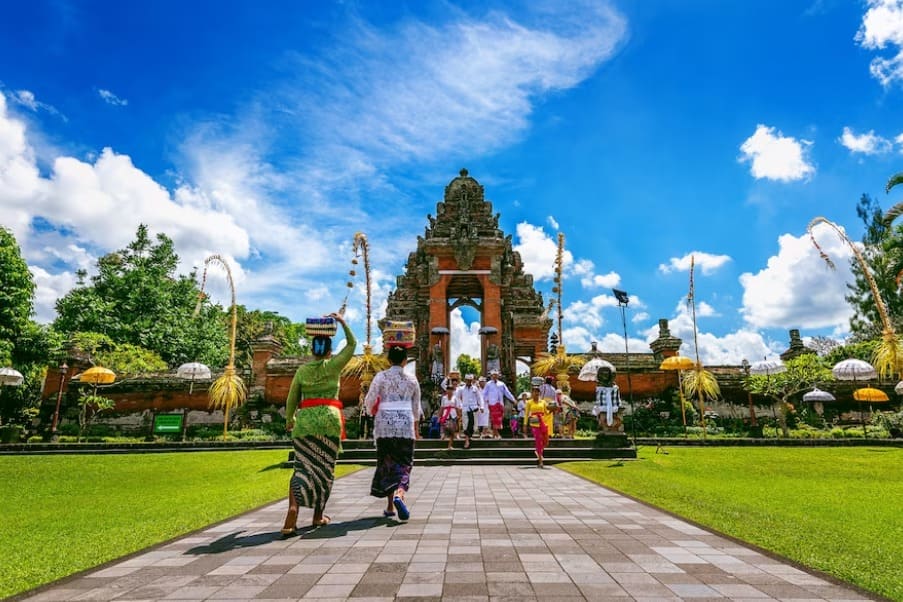
These objects are an important part of the symbols and religious paraphernalia in the Galungan series of ceremonies.
For tourists, the Galungan period is an interesting time to see Bali in a very different atmosphere.
Almost everywhere, the cultural ambiance feels stronger.
4. Tumpek Landep
The Tumpek Landep ceremony has its own unique characteristics in its implementation.
Balinese Hindus perform ceremonies for various objects or equipment used in everyday life.
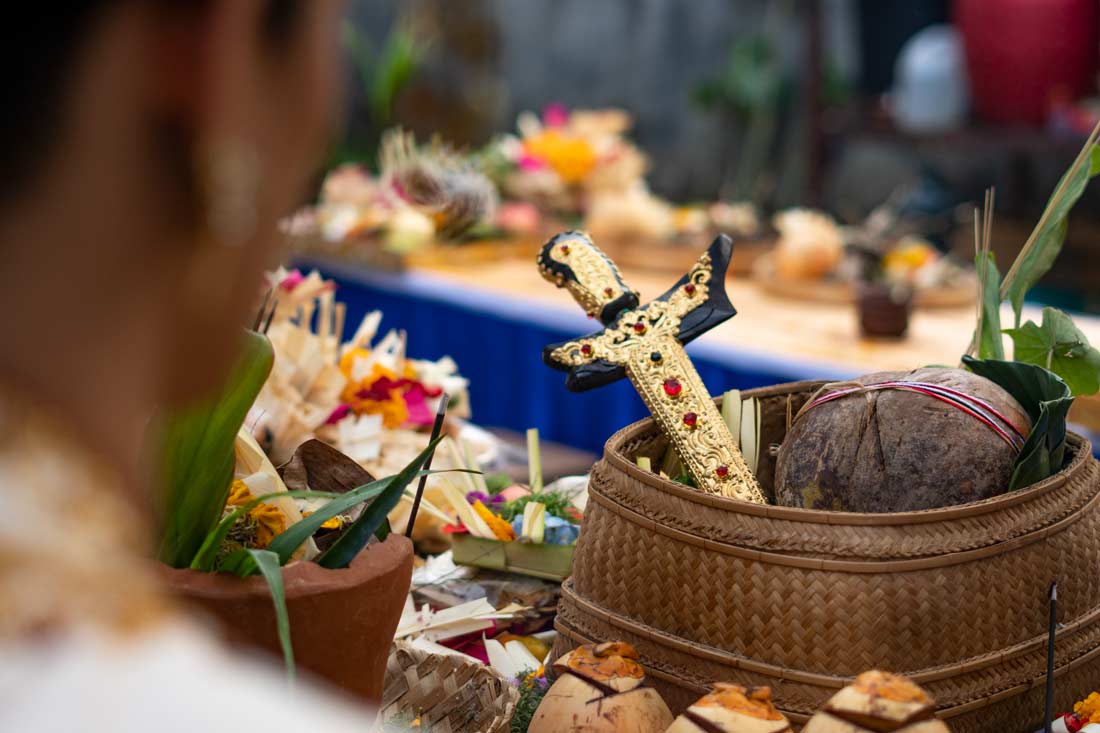
In the past, Tumpek Landep was closely associated with the purification of weapons and metal objects.
As times have changed, its meaning has also evolved and become associated with various tools that help people carry out their lives.
The ritual is performed with offerings and prayers as an expression of gratitude as well as a request that these objects provide benefits to their owners.
Tumpek Landep is celebrated every 210 days, specifically on Saniscara Kliwon Wuku Landep in the Balinese calendar.
Interestingly, the meaning of Tumpek Landep does not stop at the objects being purified.
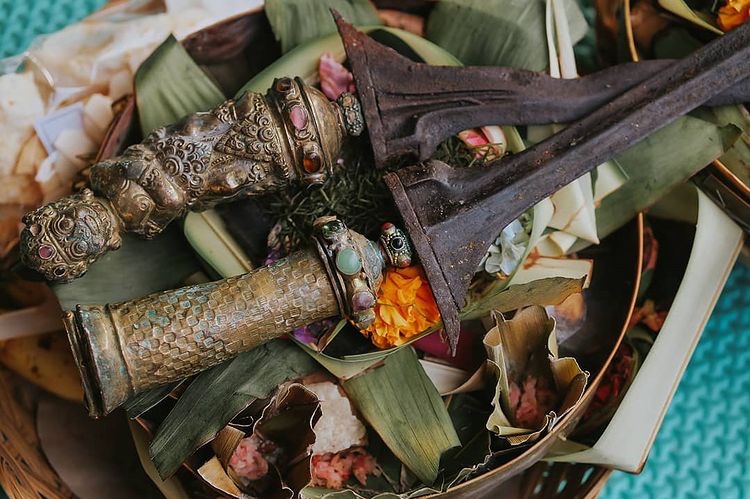
This tradition also reminds people to use their abilities and equipment for good purposes.
In other words, it is not only the objects that are cared for, but also how people use them.
Traveling to Bali often means chasing sunsets, playing on the beach, sampling local cuisine, or spending the night in bustling tourist areas.
However, there is another side of Bali that is no less interesting to discover: its traditional way of life.
Melasti shows how the community welcomes Nyepi through purification.
Ngaben shows how Balinese people understand death.
Galungan reminds us of the victory of dharma.
Meanwhile, Tumpek Landep conveys a message about gratitude and the wise use of human abilities.
These traditions are not attractions created specifically for tourists. They are all part of the lives of the Balinese people.